

A New Path Forward: How Senate Bill 34 Could Expand CPA Licensure in Maryland

The Maryland Society of Accounting and Tax Professionals (MSATP) is proud to support Senate Bill 34, proposed legislation that would modernize CPA licensure in Maryland by creating an additional pathway to earning the CPA credential. We are pleased to partner with the Maryland Association of CPAs (MACPA) in advocating for this important step forward for the profession.

As the accounting and tax landscape continues to evolve, Maryland—like many states across the country—is facing a shrinking CPA pipeline alongside increasing demand for qualified professionals. Senate Bill 34 reflects a thoughtful, balanced response to this challenge: one that expands access without compromising professional standards or public trust.

Preserving Standards While Expanding Opportunity

Importantly, Senate Bill 34 does not eliminate or weaken Maryland’s existing CPA licensure requirements. The current pathways remain fully intact, including:

  • A master’s degree in accounting, or
  • A bachelor’s degree with an accounting concentration plus 30 additional college-level credit hours

Both of these existing options continue to require successful completion of the CPA exam and at least one year of relevant professional experience.

What SB 34 does is add a third, experience-based pathway. Under this option, candidates could qualify for CPA licensure by:

  • Completing a bachelor’s degree with an accounting or business concentration
  • Passing the CPA exam
  • Completing two years of qualifying, supervised professional experience

This pathway recognizes the value of real-world experience and provides an alternative for capable professionals who may be deterred by the cost or time associated with earning additional academic credits beyond a bachelor’s degree.

Advancing DEI Through Fairer Access to the Profession

The traditional 150-hour requirement can create financial and logistical hurdles for many aspiring CPAs. Emerging research suggests that extended educational demands have inadvertently made licensure less accessible to professionals from underrepresented groups, who may already face systemic barriers in education and career progression.

By offering a third pathway centered on professional experience, the bill helps remove one of the structural obstacles that have historically limited entry into the profession. This matters because a more diverse accounting community benefits clients, firms, and the broader business environment — diversity improves problem-solving, strengthens trust, and makes the profession more reflective of the communities we serve.

Why MSATP Supports This Bill

From MSATP’s perspective, Senate Bill 34 addresses several critical needs facing Maryland’s accounting community:

  • Expanding the talent pipeline by welcoming diverse educational and career backgrounds
  • Reducing financial and structural barriers for students and career changers
  • Supporting employers, especially small and mid-sized firms, who are struggling to recruit and retain qualified professionals
  • Keeping Maryland competitive as other states adopt similar licensure reforms

By broadening access while maintaining rigorous experience and examination requirements, SB 34 strikes a responsible balance between flexibility and integrity.

A Collaborative Effort for the Profession

MSATP believes strongly that the future of the profession is best shaped through collaboration. Our partnership with MACPA on this legislation reflects a shared commitment to strengthening the CPA pipeline, protecting the public, and ensuring that Maryland remains a welcoming and forward-thinking place to build a career in accounting.

As the 2026 legislative session begins, MSATP will remain actively engaged in advocacy efforts on Senate Bill 34 and other policies affecting tax and accounting professionals across the state.

To follow legislation we’re monitoring, learn where MSATP stands on key issues, and see how you can get involved, visit our advocacy hub.


Track our 2026 Advocacy efforts here:
👉 https://msatp.org/advocating-for-you/
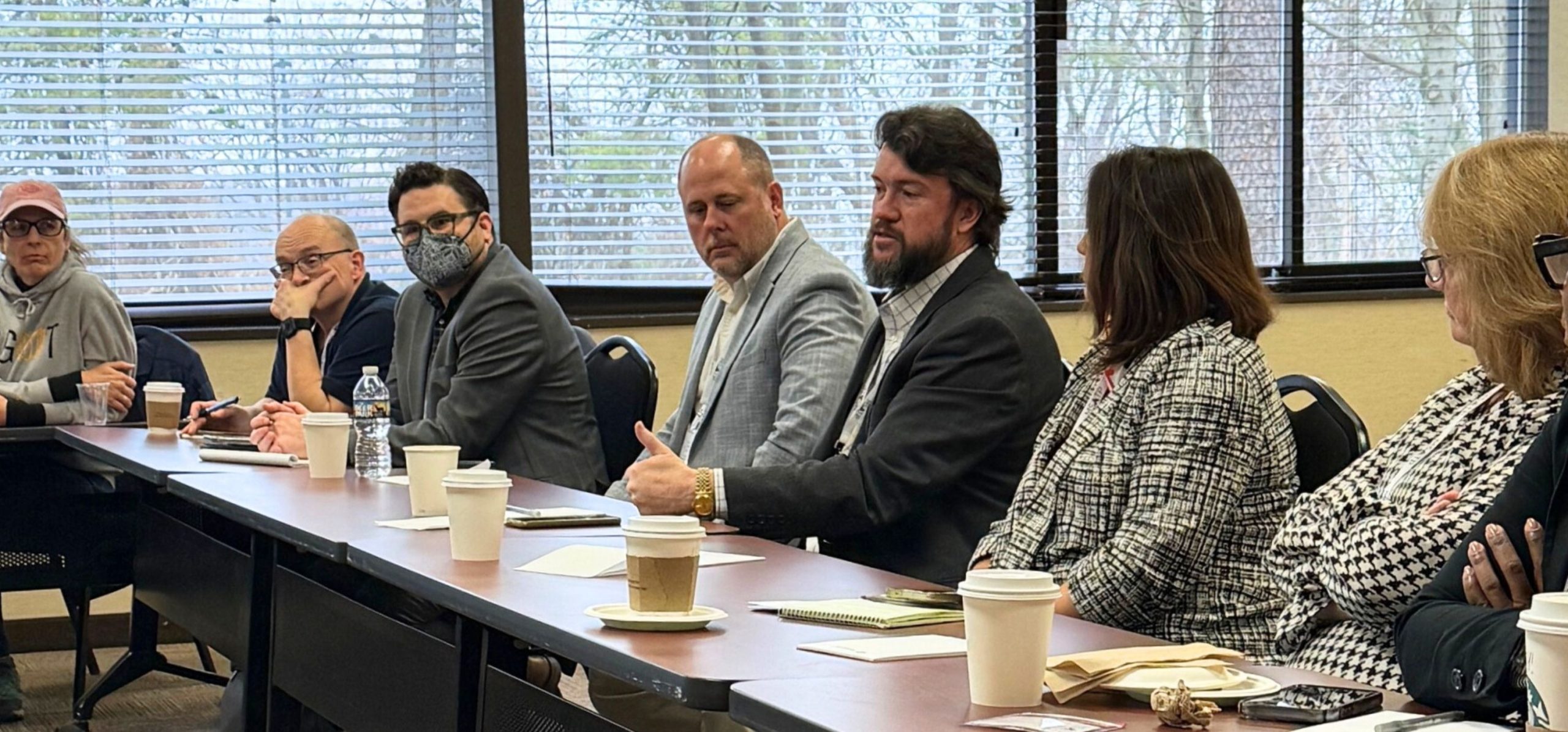
Legislative Breakfast: Bringing Practitioners and Policymakers to the Same Table

As Maryland’s legislative session approaches, the Maryland Society of Accounting and Tax Professionals recently hosted its annual Legislative Breakfast, creating space for meaningful conversation between tax and accounting professionals and state policymakers.

The breakfast brought together practitioners from across the state alongside Maryland Delegates and Senators, as well as leadership from the Comptroller of Maryland. The gathering provided an opportunity for open dialogue on the real-world impact of tax policy, administrative challenges, and the importance of thoughtful, practical legislation.

More than just an event, the Legislative Breakfast serves as a reminder that effective policy is built through education, collaboration, and direct engagement with those who work with Maryland’s tax system every day.

Why the Legislative Breakfast Matters

Tax and accounting professionals are often the first to see how legislation and administrative decisions affect small businesses, families, and communities. The Legislative Breakfast creates a nonpartisan space where those frontline perspectives can be shared directly with lawmakers and agency leadership.

These conversations help:

  • Provide legislators and agency leaders with real-world insight into tax administration and compliance challenges

  • Elevate practitioner perspectives on how policy decisions affect taxpayers and small businesses

  • Build relationships that support ongoing dialogue throughout the legislative session

  • Reinforce the role of trusted professionals in protecting taxpayers and strengthening Maryland’s tax system

A Focus on Education and Collaboration

The tone of the morning was collaborative and solutions-focused. Discussions emphasized system improvements, clearer communication, and the importance of considering both administrative feasibility and taxpayer impact when shaping policy. By convening practitioners, legislators, and the Comptroller’s leadership in the same room, MSATP continues to serve as a bridge between the profession and those responsible for administering and overseeing Maryland’s tax laws.

Supporting the Work Ahead

Events like the Legislative Breakfast are just one part of how the profession stays engaged throughout the legislative session. Ongoing education, access, and relationship-building require sustained effort.

Members who wish to further support this work may consider contributing to the Maryland Society of Accounting and Tax Professionals’ Political Action Committee (MSATP PAC). The MSATP PAC supports nonpartisan engagement with policymakers and ensures that the voice of ethical, practicing professionals continues to be heard in Annapolis.

Participation in the MSATP PAC is entirely voluntary and separate from MSATP membership dues. Contributions are not tax-deductible and are used in accordance with Maryland campaign finance laws.

As the session gets underway, MSATP remains committed to staying engaged, informed, and present on behalf of the profession. Thank you to everyone who attended the Legislative Breakfast and contributed to a productive and meaningful conversation.

Together, we continue to strengthen our professional community and the systems that serve Maryland taxpayers.


MSATP Takes Stand Against Proposed Tax on Accounting Services

March 15, 2025

This week, MSATP Executive Director Giavante’ Hawkins testified before both the House Ways and Means Committee and the Senate Budget and Taxation Committee in opposition to House Bill 1554 and Senate Bill 1045, which would impose a new 2.5% sales tax on accounting and tax services provided to business entities.

Our Message to Legislators

In testimony before both committees, Hawkins emphasized the devastating impact this legislation would have on Maryland’s accounting professionals and the businesses they serve.

“This legislation would devastate small accounting practices throughout Maryland, most of which are small businesses themselves operating on thin margins,” Hawkins testified. “These firms would face an impossible choice: absorb the tax and further reduce already slim profit margins, or pass the tax to clients and risk losing them to larger firms or out-of-state providers.”

A key point in our testimony was the cross-border disadvantage this would create for Maryland accounting professionals. As Hawkins explained to the committees, “A business in Western Maryland could easily drive 20 minutes to Pennsylvania and establish a relationship with an accountant there, completely bypassing this tax. This places Maryland accounting professionals at a severe competitive disadvantage.”

Inequitable Treatment

Our testimony also highlighted the inexplicable disparity in how the bill treats different professional services.

“While accounting services under NAICS code 5412 are specifically targeted, legal services under NAICS code 5411 are conspicuously absent from the list of taxable services,” noted Hawkins. “This selective approach would apply the tax to approximately 188,917 accounting, tax preparation, and bookkeeping businesses while exempting approximately 359,026 legal service businesses.”

This inequitable treatment is particularly problematic since some legal service providers also offer tax services but would remain exempt under the proposed legislation.

Taxing Mandatory Compliance

Perhaps most concerning is that this bill would create a “tax on a tax” by increasing costs for services that are essential for compliance with mandatory tax filing requirements.

“Filing tax returns is not optional – it is required by law,” Hawkins emphasized. “We should not be increasing fees for those who choose to hire a tax preparer to ensure they are in compliance with tax laws.”

The Fight Continues

While we appreciate the opportunity to testify, the fight is far from over. MSATP is continuing our advocacy efforts by reaching out to individual legislators and committee members.

“We are asking that if this bill moves forward, tax and accounting services be removed from the list of taxable services,” says Hawkins. “None of our neighboring states – Pennsylvania, Delaware, West Virginia, or Virginia – impose sales tax on accounting and tax preparation services. This would place Maryland tax professionals at a severe competitive disadvantage.”

How Members Can Help

MSATP members can support our efforts by:

  1. Contacting your local representatives to express your concerns
  2. Sharing the potential impact on your practice and clients
  3. Emphasizing that this tax would harm compliance efforts and potentially reduce state revenue

We have prepared template letters that members can use when contacting legislators. These are available in the members-only section of our website.

We will continue to keep members updated as these bills progress through the legislative process. Your voice matters in this important fight for our profession and the businesses we serve throughout Maryland.


The Maryland Society of Accounting and Tax Professionals represents over 2,000 tax and accounting professional members who serve more than 700,000 Maryland residents.

Maryland Society of Accounting and Tax Professionals Champions CPA Mobility Through Senate Bill 51

The Maryland Society of Accounting and Tax Professionals (MSATP) took a strong stance on advancing the accounting profession as representatives testified before the Senate Education, Energy, and the Environment Committee on January 30, 2025, advocating for Senate Bill 51. This important legislation aims to streamline CPA mobility requirements, making it easier for qualified CPAs from other states to practice in Maryland.

MSATP Executive Director Giavante’ Hawkins testified alongside MACPA leadership and bill sponsor Senator Ellis, reinforcing the organization’s strong commitment to modernizing Maryland’s CPA practice privileges. Senate Bill 51 seeks to streamline reciprocal licensing requirements, aligning them with the universal standard of passing the Uniform CPA Examination, rather than imposing additional state-specific verifications. This change aims to enhance CPA mobility, reduce unnecessary barriers, and ensure consistency in professional licensing.

Why This Matters Now More Than Ever

The accounting profession is at a critical juncture. As states begin to reevaluate the traditional 150-hour education requirement for CPA licensure, mobility reform becomes increasingly important. These changes reflect growing recognition that rigid educational requirements may create unnecessary barriers to entry while not necessarily enhancing professional competency.

Maryland’s SB51 aligns with this national momentum toward modernizing CPA requirements. By focusing on the Uniform CPA Exam as the key qualification metric, rather than varying state-specific requirements, the bill acknowledges that professional competency can be demonstrated through standardized testing and practical experience.

Key Changes Proposed by SB51

The legislation would modify current requirements by:

  • Recognizing CPAs licensed in other states who have passed the Uniform CPA Examination
  • Eliminating the need for NASBA verification of state requirements
  • Maintaining strong professional standards while reducing bureaucratic barriers

Impact on the Profession

This reform comes at a crucial time when the accounting industry faces:

  • A growing shortage of CPAs nationwide
  • Increasing demand for cross-state services in our digital economy
  • Evolution in educational approaches to professional qualification
  • Need for greater workforce mobility and flexibility

The bill preserves critical consumer protections by requiring out-of-state CPAs to:

  • Submit to Maryland Board jurisdiction
  • Comply with state regulations
  • Cease practice if their home state license becomes invalid

MSATP remains committed to supporting legislation that enhances professional mobility while protecting public interest. Senate Bill 51, scheduled to take effect October 1, 2025, represents a significant step toward modernizing CPA practice requirements while maintaining high professional standards.

Navigating the BOI Reporting Injunction and Compliance Recommendations

The Maryland Society of Accounting and Tax Professionals (MSATP) acknowledges the recent federal court decision temporarily halting the enforcement of the Corporate Transparency Act (CTA) and its Beneficial Ownership Information (BOI) reporting requirements. This development introduces uncertainty for many small businesses and their advisors.

In alignment with the American Institute of CPAs (AICPA), which has voiced significant concerns about the current BOI reporting timeline, MSATP emphasizes the importance of staying informed and prepared. While the court’s decision has paused enforcement, we strongly recommend that businesses approaching the January 1, 2025, filing deadline proceed with submitting their BOI reports to avoid potential complications if the ruling is reversed.

MSATP remains committed to supporting our community of accountants, CPAs, tax professionals, bookkeepers, and CFPs during this period of change. We will continue to provide timely updates and resources to assist in navigating these regulatory shifts. Your dedication to Maryland’s small businesses is invaluable, and together, we will ensure compliance and uphold the highest standards of our profession.

Understanding the Recent Changes to the Employee Retention Credit (ERC)

The Employee Retention Credit (ERC) has been a significant topic of discussion in the financial community in recent months. The Internal Revenue Service (IRS) recently spotlighted a concerning trend of aggressive promotion and scams connected with the credit. Unfortunately, many well-intentioned businesses have fallen victim to such “ERC mills,” resulting in a web of inaccuracies and potential penalties.

What has the IRS Done?
The IRS is offering a lifeline to businesses. They’re granting employers an avenue to rescind any inaccurate claims for the ERC, especially if they’ve been ensnared by the misleading promises of these “ERC mills.”
Notably, the IRS paused the processing of new ERC claims last month. This decision was a reaction to an unexpected surge in claims, which resulted from the relentless promotion of the ERC as an easy avenue to access federal funds. However, recognizing the challenges this could bring to innocent businesses tricked by scams, the IRS also introduced a process for withdrawing illegitimate claims. This can help employers avoid accruing unwanted interest and penalties.

How Does the Withdrawal Process Work?
For the employers who, in good faith, applied for the ERC but haven’t yet seen a refund, there’s now an option to withdraw their submission. This allows them to sidestep future complications, such as repayments, interest, and penalties. If a claim is withdrawn, it’s as though it never existed, ensuring the IRS imposes no penalties or interest.
However, it’s essential to note that any fraudulent claims, or involvement in such schemes, won’t be protected from potential criminal investigation and prosecution.

A Checklist for Withdrawal Eligibility:
* The claim was made on an adjusted employment return.
* The adjusted return was filed solely to claim the ERC, with no other adjustments made.
* The entirety of the ERC claim is intended for withdrawal.
* The IRS hasn’t paid the claim or, if they have, the refund check hasn’t been cashed or deposited by the business.

Upcoming Course Announcement: Dive Deeper into the ERC Changes
For those seeking a more comprehensive understanding of these recent developments, we’re excited to announce an upcoming course:
Employee Retention Credit (ERC) 2023 Update
Date: November 29, 2023
Time: 2 – 3:30 PM
The course will feature attorney speakers from Frost Law, who’ll delve deep into the nuances of the recent ERC changes, providing professional insights and guidance.

REGISTER HERE

This course aims to equip businesses and tax professionals with the knowledge they need to navigate these turbulent waters, ensuring they can make informed decisions related to the ERC.

Be vigilant, stay informed, and always prioritize the best interests of your business.

Maryland Society of Accounting and Tax Professionals Champions Taxpayer Advocacy at Governor Wes Moore’s Bill Signing Event

The Maryland Society of Accounting and Tax Professionals (MSATP) has long been a stalwart advocate for the accounting and tax profession in the state of Maryland. Recently, the society’s Committee on Professional Regulation volunteers Betty Kohls Stehman and Jim Arnie and executive director, Giavante’ Hawkins had the honor of attending Governor Wes Moore’s bill signing ceremony for Senate Bill 660. This pivotal legislation establishes the Taxpayer Advocate Division within the Comptroller’s office, marking a significant milestone in Maryland’s commitment to protecting taxpayers’ rights. The event served as a testament to MSATP’s dedication to advocating for the profession and its clients.

Senate Bill 660 holds immense significance for both tax professionals and taxpayers in Maryland. The bill’s passage establishes the Taxpayer Advocate Division within the Comptroller’s office, serving as an independent entity focused on protecting taxpayers’ rights and ensuring fair treatment by tax authorities. This division will work closely with taxpayers, addressing their concerns, providing assistance, and resolving any disputes that may arise. By creating a streamlined process for resolving tax-related issues, the Taxpayer Advocate Division aims to enhance transparency, accountability, and efficiency in Maryland’s tax administration.

MSATP has always been at the forefront of promoting the highest standards of professionalism and integrity within the accounting and tax field. The society recognizes that an essential aspect of maintaining public trust in the profession is safeguarding taxpayers’ rights. This dedication to advocacy was exemplified by MSATP’s presence at Governor We Moore’s bill signing event, which showcased the society’s commitment to championing the interests of both tax professionals and their clients.

MSATP has fostered a strong and collaborative relationship with the Maryland Comptroller’s office. This partnership has been instrumental in advancing the society’s mission of advocating for the accounting and tax profession. The close collaboration with the Comptroller’s office has allowed MSATP to effectively address critical issues and concerns affecting tax professionals and taxpayers in Maryland. As we move forward, MSATP eagerly looks forward to continuing this partnership and working closely with the Taxpayer Advocate Division to ensure that the interests of both tax professionals and their clients are well-represented. By fostering this ongoing collaboration, MSATP aims to contribute to developing effective policies and initiatives that will benefit the profession and enhance the overall tax experience for Maryland taxpayers.

News For Your Week Ahead: May 13, 2022

Matthew Pollard joined Executive Director Bill Feehley to tell you how he will help you create a Rapid Growth Practice which is your ticket to higher profits and less stress.

Matthew Pollard is an internationally recognized consultant, speaker, blogger, author, mentor, coach, and serial entrepreneur with five multi-million dollar business success stories under his belt, all before the age of 30. He is the founder and CEO of Rapid Growth, LLC, dedicated to achieving maximum ROI for businesses of all sizes.

Drawing from over a decade of experience growing his own businesses to multiple millions – as well as his transformative work with thousands of clients – Matthew Pollard reveals his tried and tested Rapid Growth® blueprint. This is his signature A-Z system, proven to propel even the most unprofitable business into unstoppable momentum and growth.

Learn More!

Coming Up: On Thursday, May 19 at 12 p.m. Rob Smith of Liscio will join us again for another episode in his Lunch & Learn series on Office 365. View our episodes live on LinkedIn, Facebook, YouTube, and Twitter! If you have questions for the speaker, you can ask them directly in the comments section of the stream on all platforms.


Delaware – Property Tax: Law Imposing Tax on Gross Rental Income Passed | via Wolters Kluwer IntelliConnect

For property tax purposes, Delaware passed a law imposing a tax on gross rental income. The law authorizes the Mayor and Council to impose a gross receipts tax of no more than 3% on:

  • the gross rental income of any lot where there are recreational facilities for recreational vehicles, load or truck campers, camping trailers, trailers, motorhomes, or cottage type structures located within the Delaware city boundaries; and
  • rents or lease payments from apartments and other leased premises that are not subject to city property taxes located within the Delaware city boundaries.

Ch. 299 (S.B. 238), Laws 2021, effective April 28, 2022


Virginia – Property Tax: Special Commissioner Appointment, Coveyance of Real Estate with Delinquent Taxes Authorized | via Wolters Kluwer IntelliConnect

For Virginia property tax purposes, enacted legislation amends the delinquent tax land provisions. The legislation authorizes localities to petition a circuit court to appoint a special commissioner to convey certain real estate with delinquent taxes to a locality’s land bank entity or an existing nonprofit entity designated to carry out the functions of a land bank. The legislation also allows real estate that contains a derelict building and has delinquent taxes exceeding 10% of its assessed value to be conveyed by a special commissioner to the locality, the locality’s land bank entity, or a qualified nonprofit entity. Additionally, a land bank or qualified nonprofit entity that receives delinquent parcels is required to pay any surplus above the amount of unpaid taxes or liens to the former owners or other parties with an interest in the property.

Ch. 713 (S.B. 142), Laws 2022, effective July 1, 2022

Get access to news updates like the ones above when you sign up for CCH Tax Aware, a complimentary benefit of being an MSATP member! Visit the perks page of your profile for information on how to sign up.


“A Closer Look” at Expanding Access in Puerto Rico | CL-2022-08

The IRS published the latest executive column, “A Closer Look,” which features Ken Corbin, IRS Taxpayer Experience Officer, discussing how the IRS is working to serve residents of Puerto Rico. This year marks the first time in history that many families with children in Puerto Rico will be eligible to claim the Child Tax Credit, which has been expanded to provide up to $3,600 per child. “We know we must start from the ground up to reach out to Puerto Rico residents who may have little or no experience filing a federal tax return or receiving the credit,” said Corbin. “Not only do we want them to know about the credit, but we also want them to know there is help – some of it free – for getting it.”

For more information, click here.

News For Your Week Ahead: April 29, 2022

Tammy Nickels of Thompson Reuters joined us to tell you about a benefit included in your MSATP membership CCH TaxAware. Be sure to take care of this amazing program to track upcoming tax changes for you and your clients.

Watch on YouTube.


Jim Arnie joined us to give a final update on the Legislative session in Annapolis. Be sure to tune in to learn all this year’s tax changes that affect you and your business.

Watch on YouTube.

Coming Up: On Thursday, May 5 at 12 p.m. Rob Smith of Liscio will join us again for another episode in his Lunch & Learn series on Office 365. View our episodes live on LinkedIn, Facebook, YouTube, and Twitter! If you have questions for the speaker, you can ask them directly in the comments section of the stream on all platforms.


IRS Revises Tax Year 2021/Filing Season 2022 FAQs for the Child Tax Credit | IR-2022-96

The IRS issued a revised set of frequently asked questions for tax year 2021 and filing season 2022 for the Child Tax Credit. These frequently asked questions (FAQs) are released to the public in Fact Sheet 2022-28 PDF, April 27, 2022. The revision adds Topic F:  Commonly Asked Filing Season Questions, Questions 1 through 6.

For more information, click here.


Updated Mortality Improved Rates and Static Mortality Tables for Defined Benefit Pension Plans for 2023 | N-2022-22

Notice 2022-22 sets forth the updated mortality improvement rates and static mortality tables that are used for purposes of determining minimum funding requirements under § 430(h)(3) for 2023 and minimum present value under § 417(e)(3) for distributions with annuity starting dates that occur during stability periods beginning in the 2023 calendar year. Notice 2022-22 will be in IRB:  2022-20, dated May 16, 2022.

For more information, click here.


MSATP Sponsors A Taste for Pro Bono and MCEE’s 2022 Financial Education & Capability Teacher Awards

MSATP was happy to sponsor the MVLS A Taste for Pro Bono event and MCEE’s 2022 Financial Education & Capability Teacher Awards. Several of our MSATP members also volunteered to take on MVLS cases to help out within the community.

News For Your Week Ahead: March 18, 2022

Coming Up: On Thursday, March 24th at 12 p.m. Rob Smith of Liscio will join us for the 4th episode of his Lunch & Learn series where he will discuss Microsoft Teams and how to better set it up to fit your business. In this Lunch & Learn series, you can now view our episodes live on LinkedIn, Facebook, YouTube, and Twitter! If you have questions for the speaker, you can ask them directly in the comments section of the stream on all platforms. Be sure to follow us on all of our social media to enjoy our upcoming events and stay up to date on the latest news!


Relief from Addition to Tax for Underpayment of Estimated Income Tax by Individual Farmers and Fishermen | N-2022-13

Notice 2022-13 provides a waiver of the addition to tax under section 6654 for underpayment of estimated income tax by qualifying farmers and fishermen described in the notice.  Under the notice, the addition to tax is waived for farmers and fishermen who, by April 18, 2022, or, for those taxpayers who reside in Maine or Massachusetts, by April 19, 2022, file their 2021 federal income tax return and pay in full any tax reported as due on the return.

For more information, click here.


Tax Time Guide: Minimize Cyber Footprints, Protect Personal Information Online | IR-2022-60

The IRS urged people to stay resolute against ongoing scams and schemes by properly securing computers, tablets and phones. Solid cybersecurity protection and scam recognition is vital to reduce the threat of identity theft inside and outside the tax system.

The IRS works closely with the Security Summit, a partnership with state tax agencies and the private-sector tax industry, to help protect taxpayer information and defend against identity theft. Taxpayers and tax professionals can take steps to help in this effort by doing things like minimizing cybersecurity footprints and recognizing common scams and schemes.

For more information, click here.


April 2022 AFR | RR-2022-08

Revenue Ruling 2022-08 provides various prescribed rates for federal income tax purposes including the applicable federal interest rates, the adjusted applicable federal interest rates, the adjusted federal long-term rate, and the adjusted federal long-term tax-exempt rate. These rates are determined as prescribed by § 1274.

The rates are published monthly for purposes of sections 42, 382, 412, 642, 1288, 1274, 7520, 7872, and various other sections of the Internal Revenue Code

For more information, click here.


Revenue Procedure 2022-17 | RR-2022-17

Revenue Procedure 2022-17 provides: (1) two tables of limitations on depreciation deductions for owners of passenger automobiles placed in service by the taxpayer during the calendar year 2022; and (2) a table of dollar amounts that must be used to determine income inclusions by lessees of passenger automobiles with a lease term beginning in the calendar year 2022. The tables detailing these depreciation limitations and amounts used to determine lessee income inclusions reflect the automobile price inflation adjustments required by section 280F(d)(7). For purposes of this revenue procedure, the term “passenger automobiles” includes trucks and vans.

For more information, click here.