
A Win for Maryland’s Tax Professionals: Two Bills Pass the General Assembly and Head to the Governor’s Desk


We have big news coming out of Annapolis. On Sine Die — the final day of the 2026 Maryland General Assembly session — both House Bill 1149 and Senate Bill 34 passed both chambers and are now headed to Governor Wes Moore’s desk for signature. These are real wins for Maryland’s accounting and tax community, and MSATP is proud to have played a direct role in making them happen.

Here is what each bill does, why it matters for your practice, and what comes next.


House Bill 1149: Expanding the Comptroller’s Settlement Authority

From the Breakfast Table to the Governor’s Desk

This one starts with our members — because that is exactly how it should work.

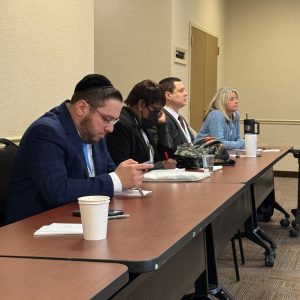
At MSATP’s Legislative Breakfast earlier this year, member Jonathan Rivlin raised a challenge that many of our practitioners know all too well: the frustration of representing clients with aged tax debts and having virtually no viable path to resolution. Jonathan’s conversation at that breakfast was the seed that grew into House Bill 1149.

From that conversation Delegate Caylin Young and Delegate Kevin Hornberger, were able to move HB 1149 forward as a bipartisan bill. Introduced on February 11, 2026 and assigned to the Ways and Means Committee, the bill earned a favorable committee report, was adopted by the House, and has now passed both chambers of the General Assembly. In a legislative environment where common ground can be hard to find, the fact that this legislation carried bipartisan sponsorship and broad support from both sides of the aisle is a testament to how practical and nonpartisan good tax policy really is — and to the relationships MSATP has built with champions in both parties.

Today, that bill is on its way to Governor Moore. What started as one member’s voice at a breakfast table is now one signature away from becoming Maryland law.

Thank you, Jonathan —

HB 1149 is heading to the governor because a member of this community identified a problem, brought it to the table, and trusted Delegate Caylin Young and Delegate Kevin Hornberger to push it forward. That is advocacy working exactly as it should.

What the Bill Does

House Bill 1149 amends Section 6-219 of the State Finance and Procurement Article of the Annotated Code of Maryland. Under the original law, the Comptroller could only settle a state tax claim that had been in arrears for at least two years. HB 1149 removes that two-year waiting period entirely, authorizing the Comptroller to settle a claim of the State that is in arrears regardless of how long that claim has been outstanding.

The settlement authority applies to claims against a person who receives or collects State money, against the surety of that person, or against any other person. Before settling any claim, the Comptroller is still required to examine it thoroughly and be satisfied that the State could not collect through legal process — a safeguard that protects the public interest while giving practitioners and their clients a realistic path forward.

The bill takes effect October 1, 2026.

Understanding the Amendment

As the bill moved through the Ways and Means Committee, it was amended in one important way. The committee added a specific provision addressing business entities that have permanently ceased operations. Under this amendment, if a claim of the State is in arrears against a business entity that has permanently ceased operations, the Comptroller may settle that claim regardless of the period of time for which it has been in arrears — with no additional conditions attached.

This targeted provision acknowledges a practical reality that many of our members have encountered: defunct businesses leave behind unresolved tax liabilities with no realistic prospect of full collection. The amendment ensures the Comptroller has clear, unambiguous authority to bring those cases to a close.

In plain language —

Before HB 1149, the Comptroller’s hands were tied on old debts. After October 1, 2026, the Comptroller will have the flexibility to settle aged claims — and for businesses that have permanently closed, that authority is unconditional. This is a meaningful change for practitioners navigating these situations on behalf of clients.

Why It Matters for Our Members

Many of our members spend considerable time representing clients who carry aged tax liabilities — debts that have accumulated interest and penalties over years, sometimes over a decade. The current system offers very little room to negotiate a realistic resolution, particularly when the debt is considered old. With HB 1149 on its way to becoming law, that changes.

Taxpayers can achieve resolution. The state can collect something rather than nothing. And our members can do their jobs more effectively as advocates. That is a win on every side of the table.

MSATP’s Role —

Our Executive Director provided written and in-person testimony before the Senate Budget and Taxation Committee in support of HB 1149. We made the case clearly: practitioners need workable tools to resolve legacy tax debt on behalf of their clients, and this bill delivers exactly that.

One Gap We Are Already Working to Close

We want to be transparent about one limitation of HB 1149 as currently enacted: the expanded settlement authority is focused on business-level claims and does not yet extend fully to individual taxpayers. We know this is a gap that matters deeply to many of our members and their clients, and this is not the end of the conversation.

We are already committed to returning to Annapolis in the 2027 session to advocate for an expansion of this authority that includes individuals. The bipartisan foundation we built with Delegate Young and Delegate Hornberger this year gives us a strong platform to build on, and we will be working with our legislative partners again to carry that effort forward.

Stay tuned for opportunities to get involved, share your client stories, and add your voice to that next push.


Senate Bill 34: Modernizing CPA Licensure Qualifications

How It Came to Be

Senate Bill 34 was pre-filed on October 31, 2025, introduced on January 14, 2026, and sponsored by Senators Ellis and Feldman. Assigned to the Senate Education, Energy, and the Environment Committee, the bill amends Sections 2-302 and 2-303 of the Business Occupations and Professions Article of the Annotated Code of Maryland — the statutes that govern the qualifications required to obtain a CPA license in Maryland. It takes effect October 1, 2026.

Three New Pathways to Licensure

The most significant change in SB 34 is the elimination of the blanket 150-semester-hour requirement that has long been the single gateway to CPA licensure in Maryland. In its place, the bill creates three distinct pathways, giving candidates meaningful choices based on their educational background and willingness to commit additional work experience.

Pathway 1 — Master’s Degree

A master’s degree with a concentration in accounting (or its equivalent) plus not less than 1 year of practical work experience (2,000 hours). This pathway rewards advanced academic preparation with a shorter experience requirement.

Pathway 2 — Bachelor’s Degree + 30 Additional Credits

A baccalaureate degree plus 30 additional semester credit hours with a concentration in accounting, combined with not less than 1 year of practical work experience (2,000 hours). The closest equivalent to the former 150-hour model, but with an explicit focus on accounting concentration.

Pathway 3 — Bachelor’s Degree Alone

A baccalaureate degree with a concentration in accounting plus not less than 2 years of practical work experience (4,000 hours). This pathway trades additional academic hours for a deeper investment in supervised professional experience.

The bottom line —

SB 34 does not lower the bar for becoming a CPA in Maryland — it restructures it. Candidates who pursue less formal education must invest more time in supervised practice. The result is three rigorous, credible routes into the profession rather than one.

What Changes for Work Experience

SB 34 also updates the practical work experience requirements in Section 2-302. The window in which experience may be accumulated is extended from 3 years to 6 years, giving candidates more flexibility in how they complete their hours alongside other life and career demands. The minimum duration remains at least 1 year.

The experience must still involve accounting, attest, management advisory, financial advisory, tax, or consulting services, and must be performed under the direction of a licensed CPA or an appropriately qualified professional as determined by the Board. Employment in government, industry, academia, or public practice all qualify.

What Stays the Same

SB 34 preserves the foundational requirements that define the integrity of the CPA credential. Candidates must still be at least 18 years of age, be of good character and reputation, and pass the CPA examination administered by the Board. The degree must come from an accredited institution — a member of AACSB, ACBSP, or a regionally accredited institution recognized by the Board. The Board retains full authority to determine curriculum equivalencies and qualifying institutions.

Why It Matters for Our Members

For members who run firms or manage staff, SB 34 addresses a practical reality: the pipeline of new CPAs has been narrowing for years, and the 150-hour requirement has been a documented barrier for many otherwise capable and committed candidates. These three pathways expand the pool of future colleagues and employees without compromising the profession’s standards.

For members who mentor, teach, or recruit, the new framework opens conversations about how to advise students and early-career professionals on the most appropriate path given their circumstances. The two-year, 4,000-hour experience pathway creates real opportunities for firms to bring on talented baccalaureate graduates and invest in developing them.

For enrolled agents, tax preparers, and bookkeepers in our community who may be considering the CPA credential themselves, SB 34 may open a more realistic pathway than has previously existed.

Our Position —

MSATP supports this legislation. Creating multiple rigorous pathways to licensure is a sensible, forward-looking response to the profession’s workforce challenge. We will continue to monitor implementation and provide guidance to our members as the Board develops its rules and the new framework takes effect on October 1, 2026.


What Comes Next

Both bills now await Governor Moore’s signature. Under Maryland law, the Governor has 30 days from presentment to act on legislation, and we have every reason to be optimistic. Here is what we are watching and working on in the meantime:

•  We will notify our members as soon as Governor Moore signs both bills into law. Both take effect October 1, 2026.

•  We are already laying the groundwork for an expanded version of HB 1149 in 2027 that extends Comptroller settlement authority to individual taxpayers — and we want to hear from you about how the current gap has affected your practice and your clients.

•  We will monitor the Board of Public Accountancy’s rulemaking process as it implements SB 34’s three new licensure pathways and provide guidance to members as those details are finalized.

•  Watch for updates through our newsletter, webinars, and the MSATP community platform.

This session was a demonstration of what MSATP membership makes possible. A conversation at a breakfast table became a bipartisan bill. That bill passed both chambers of the Maryland General Assembly. And now it is one signature away from becoming law. That is your association at work.

If you have questions about either of these bills or want to get more involved in MSATP’s advocacy work, please reach out to us directly. We would love to hear from you.

A New Path Forward: How Senate Bill 34 Could Expand CPA Licensure in Maryland

The Maryland Society of Accounting and Tax Professionals (MSATP) is proud to support Senate Bill 34, proposed legislation that would modernize CPA licensure in Maryland by creating an additional pathway to earning the CPA credential. We are pleased to partner with the Maryland Association of CPAs (MACPA) in advocating for this important step forward for the profession.

As the accounting and tax landscape continues to evolve, Maryland—like many states across the country—is facing a shrinking CPA pipeline alongside increasing demand for qualified professionals. Senate Bill 34 reflects a thoughtful, balanced response to this challenge: one that expands access without compromising professional standards or public trust.

Preserving Standards While Expanding Opportunity

Importantly, Senate Bill 34 does not eliminate or weaken Maryland’s existing CPA licensure requirements. The current pathways remain fully intact, including:

  • A master’s degree in accounting, or
  • A bachelor’s degree with an accounting concentration plus 30 additional college-level credit hours

Both of these existing options continue to require successful completion of the CPA exam and at least one year of relevant professional experience.

What SB 34 does is add a third, experience-based pathway. Under this option, candidates could qualify for CPA licensure by:

  • Completing a bachelor’s degree with an accounting or business concentration
  • Passing the CPA exam
  • Completing two years of qualifying, supervised professional experience

This pathway recognizes the value of real-world experience and provides an alternative for capable professionals who may be deterred by the cost or time associated with earning additional academic credits beyond a bachelor’s degree.

Advancing DEI Through Fairer Access to the Profession

The traditional 150-hour requirement can create financial and logistical hurdles for many aspiring CPAs. Emerging research suggests that extended educational demands have inadvertently made licensure less accessible to professionals from underrepresented groups, who may already face systemic barriers in education and career progression.

By offering a third pathway centered on professional experience, the bill helps remove one of the structural obstacles that have historically limited entry into the profession. This matters because a more diverse accounting community benefits clients, firms, and the broader business environment — diversity improves problem-solving, strengthens trust, and makes the profession more reflective of the communities we serve.

Why MSATP Supports This Bill

From MSATP’s perspective, Senate Bill 34 addresses several critical needs facing Maryland’s accounting community:

  • Expanding the talent pipeline by welcoming diverse educational and career backgrounds
  • Reducing financial and structural barriers for students and career changers
  • Supporting employers, especially small and mid-sized firms, who are struggling to recruit and retain qualified professionals
  • Keeping Maryland competitive as other states adopt similar licensure reforms

By broadening access while maintaining rigorous experience and examination requirements, SB 34 strikes a responsible balance between flexibility and integrity.

A Collaborative Effort for the Profession

MSATP believes strongly that the future of the profession is best shaped through collaboration. Our partnership with MACPA on this legislation reflects a shared commitment to strengthening the CPA pipeline, protecting the public, and ensuring that Maryland remains a welcoming and forward-thinking place to build a career in accounting.

As the 2026 legislative session begins, MSATP will remain actively engaged in advocacy efforts on Senate Bill 34 and other policies affecting tax and accounting professionals across the state.

To follow legislation we’re monitoring, learn where MSATP stands on key issues, and see how you can get involved, visit our advocacy hub.


Track our 2026 Advocacy efforts here:
👉 https://msatp.org/advocating-for-you/

Legislative Breakfast: Bringing Practitioners and Policymakers to the Same Table

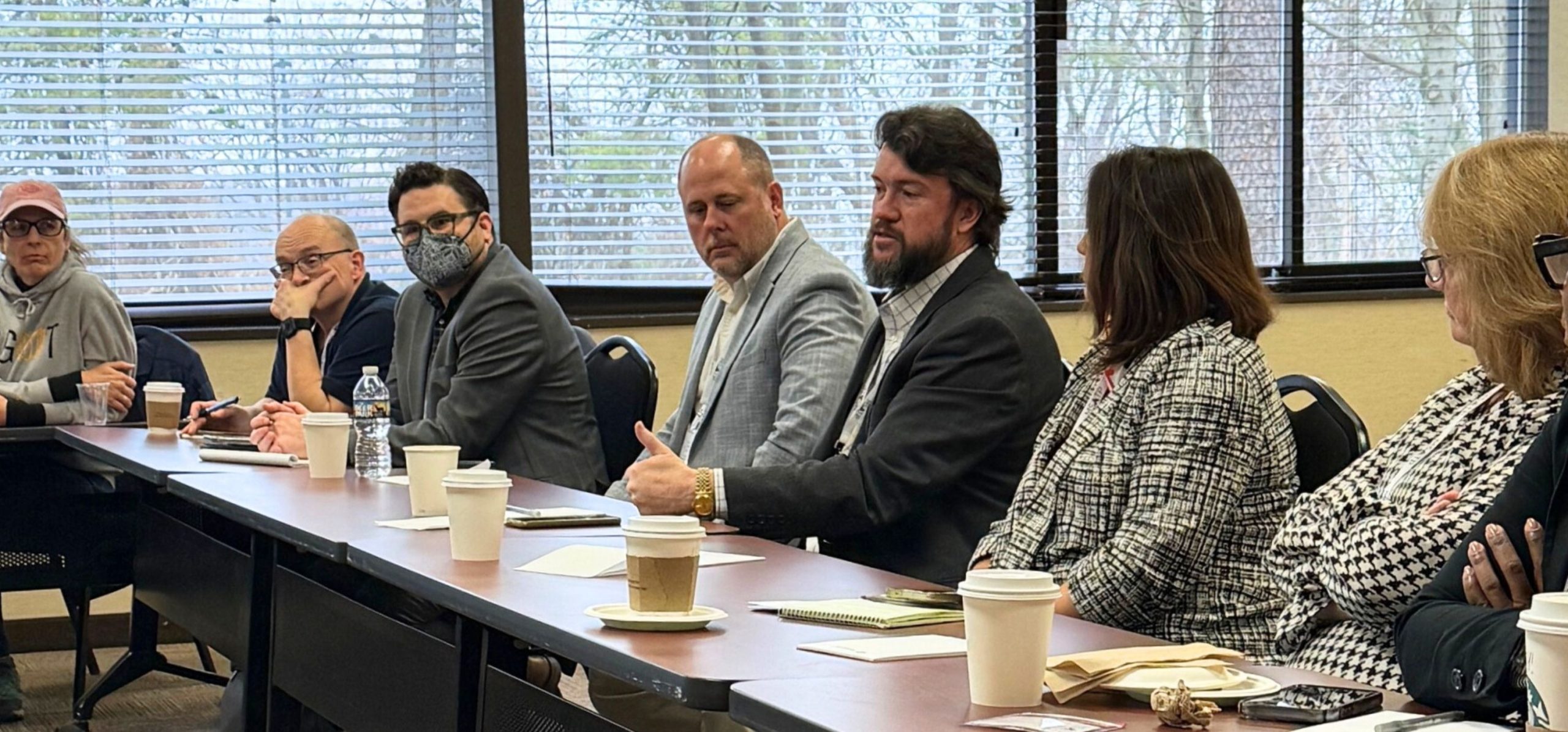
As Maryland’s legislative session approaches, the Maryland Society of Accounting and Tax Professionals recently hosted its annual Legislative Breakfast, creating space for meaningful conversation between tax and accounting professionals and state policymakers.

The breakfast brought together practitioners from across the state alongside Maryland Delegates and Senators, as well as leadership from the Comptroller of Maryland. The gathering provided an opportunity for open dialogue on the real-world impact of tax policy, administrative challenges, and the importance of thoughtful, practical legislation.

More than just an event, the Legislative Breakfast serves as a reminder that effective policy is built through education, collaboration, and direct engagement with those who work with Maryland’s tax system every day.

Why the Legislative Breakfast Matters

Tax and accounting professionals are often the first to see how legislation and administrative decisions affect small businesses, families, and communities. The Legislative Breakfast creates a nonpartisan space where those frontline perspectives can be shared directly with lawmakers and agency leadership.

These conversations help:

  • Provide legislators and agency leaders with real-world insight into tax administration and compliance challenges

  • Elevate practitioner perspectives on how policy decisions affect taxpayers and small businesses

  • Build relationships that support ongoing dialogue throughout the legislative session

  • Reinforce the role of trusted professionals in protecting taxpayers and strengthening Maryland’s tax system

A Focus on Education and Collaboration

The tone of the morning was collaborative and solutions-focused. Discussions emphasized system improvements, clearer communication, and the importance of considering both administrative feasibility and taxpayer impact when shaping policy. By convening practitioners, legislators, and the Comptroller’s leadership in the same room, MSATP continues to serve as a bridge between the profession and those responsible for administering and overseeing Maryland’s tax laws.

Supporting the Work Ahead

Events like the Legislative Breakfast are just one part of how the profession stays engaged throughout the legislative session. Ongoing education, access, and relationship-building require sustained effort.

Members who wish to further support this work may consider contributing to the Maryland Society of Accounting and Tax Professionals’ Political Action Committee (MSATP PAC). The MSATP PAC supports nonpartisan engagement with policymakers and ensures that the voice of ethical, practicing professionals continues to be heard in Annapolis.

Participation in the MSATP PAC is entirely voluntary and separate from MSATP membership dues. Contributions are not tax-deductible and are used in accordance with Maryland campaign finance laws.

As the session gets underway, MSATP remains committed to staying engaged, informed, and present on behalf of the profession. Thank you to everyone who attended the Legislative Breakfast and contributed to a productive and meaningful conversation.

Together, we continue to strengthen our professional community and the systems that serve Maryland taxpayers.


MSATP Takes Stand Against Proposed Tax on Accounting Services

March 15, 2025

This week, MSATP Executive Director Giavante’ Hawkins testified before both the House Ways and Means Committee and the Senate Budget and Taxation Committee in opposition to House Bill 1554 and Senate Bill 1045, which would impose a new 2.5% sales tax on accounting and tax services provided to business entities.

Our Message to Legislators

In testimony before both committees, Hawkins emphasized the devastating impact this legislation would have on Maryland’s accounting professionals and the businesses they serve.

“This legislation would devastate small accounting practices throughout Maryland, most of which are small businesses themselves operating on thin margins,” Hawkins testified. “These firms would face an impossible choice: absorb the tax and further reduce already slim profit margins, or pass the tax to clients and risk losing them to larger firms or out-of-state providers.”

A key point in our testimony was the cross-border disadvantage this would create for Maryland accounting professionals. As Hawkins explained to the committees, “A business in Western Maryland could easily drive 20 minutes to Pennsylvania and establish a relationship with an accountant there, completely bypassing this tax. This places Maryland accounting professionals at a severe competitive disadvantage.”

Inequitable Treatment

Our testimony also highlighted the inexplicable disparity in how the bill treats different professional services.

“While accounting services under NAICS code 5412 are specifically targeted, legal services under NAICS code 5411 are conspicuously absent from the list of taxable services,” noted Hawkins. “This selective approach would apply the tax to approximately 188,917 accounting, tax preparation, and bookkeeping businesses while exempting approximately 359,026 legal service businesses.”

This inequitable treatment is particularly problematic since some legal service providers also offer tax services but would remain exempt under the proposed legislation.

Taxing Mandatory Compliance

Perhaps most concerning is that this bill would create a “tax on a tax” by increasing costs for services that are essential for compliance with mandatory tax filing requirements.

“Filing tax returns is not optional – it is required by law,” Hawkins emphasized. “We should not be increasing fees for those who choose to hire a tax preparer to ensure they are in compliance with tax laws.”

The Fight Continues

While we appreciate the opportunity to testify, the fight is far from over. MSATP is continuing our advocacy efforts by reaching out to individual legislators and committee members.

“We are asking that if this bill moves forward, tax and accounting services be removed from the list of taxable services,” says Hawkins. “None of our neighboring states – Pennsylvania, Delaware, West Virginia, or Virginia – impose sales tax on accounting and tax preparation services. This would place Maryland tax professionals at a severe competitive disadvantage.”

How Members Can Help

MSATP members can support our efforts by:

  1. Contacting your local representatives to express your concerns
  2. Sharing the potential impact on your practice and clients
  3. Emphasizing that this tax would harm compliance efforts and potentially reduce state revenue

We have prepared template letters that members can use when contacting legislators. These are available in the members-only section of our website.

We will continue to keep members updated as these bills progress through the legislative process. Your voice matters in this important fight for our profession and the businesses we serve throughout Maryland.


The Maryland Society of Accounting and Tax Professionals represents over 2,000 tax and accounting professional members who serve more than 700,000 Maryland residents.

Maryland Society of Accounting and Tax Professionals Champions CPA Mobility Through Senate Bill 51

The Maryland Society of Accounting and Tax Professionals (MSATP) took a strong stance on advancing the accounting profession as representatives testified before the Senate Education, Energy, and the Environment Committee on January 30, 2025, advocating for Senate Bill 51. This important legislation aims to streamline CPA mobility requirements, making it easier for qualified CPAs from other states to practice in Maryland.

MSATP Executive Director Giavante’ Hawkins testified alongside MACPA leadership and bill sponsor Senator Ellis, reinforcing the organization’s strong commitment to modernizing Maryland’s CPA practice privileges. Senate Bill 51 seeks to streamline reciprocal licensing requirements, aligning them with the universal standard of passing the Uniform CPA Examination, rather than imposing additional state-specific verifications. This change aims to enhance CPA mobility, reduce unnecessary barriers, and ensure consistency in professional licensing.

Why This Matters Now More Than Ever

The accounting profession is at a critical juncture. As states begin to reevaluate the traditional 150-hour education requirement for CPA licensure, mobility reform becomes increasingly important. These changes reflect growing recognition that rigid educational requirements may create unnecessary barriers to entry while not necessarily enhancing professional competency.

Maryland’s SB51 aligns with this national momentum toward modernizing CPA requirements. By focusing on the Uniform CPA Exam as the key qualification metric, rather than varying state-specific requirements, the bill acknowledges that professional competency can be demonstrated through standardized testing and practical experience.

Key Changes Proposed by SB51

The legislation would modify current requirements by:

  • Recognizing CPAs licensed in other states who have passed the Uniform CPA Examination
  • Eliminating the need for NASBA verification of state requirements
  • Maintaining strong professional standards while reducing bureaucratic barriers

Impact on the Profession

This reform comes at a crucial time when the accounting industry faces:

  • A growing shortage of CPAs nationwide
  • Increasing demand for cross-state services in our digital economy
  • Evolution in educational approaches to professional qualification
  • Need for greater workforce mobility and flexibility

The bill preserves critical consumer protections by requiring out-of-state CPAs to:

  • Submit to Maryland Board jurisdiction
  • Comply with state regulations
  • Cease practice if their home state license becomes invalid

MSATP remains committed to supporting legislation that enhances professional mobility while protecting public interest. Senate Bill 51, scheduled to take effect October 1, 2025, represents a significant step toward modernizing CPA practice requirements while maintaining high professional standards.