
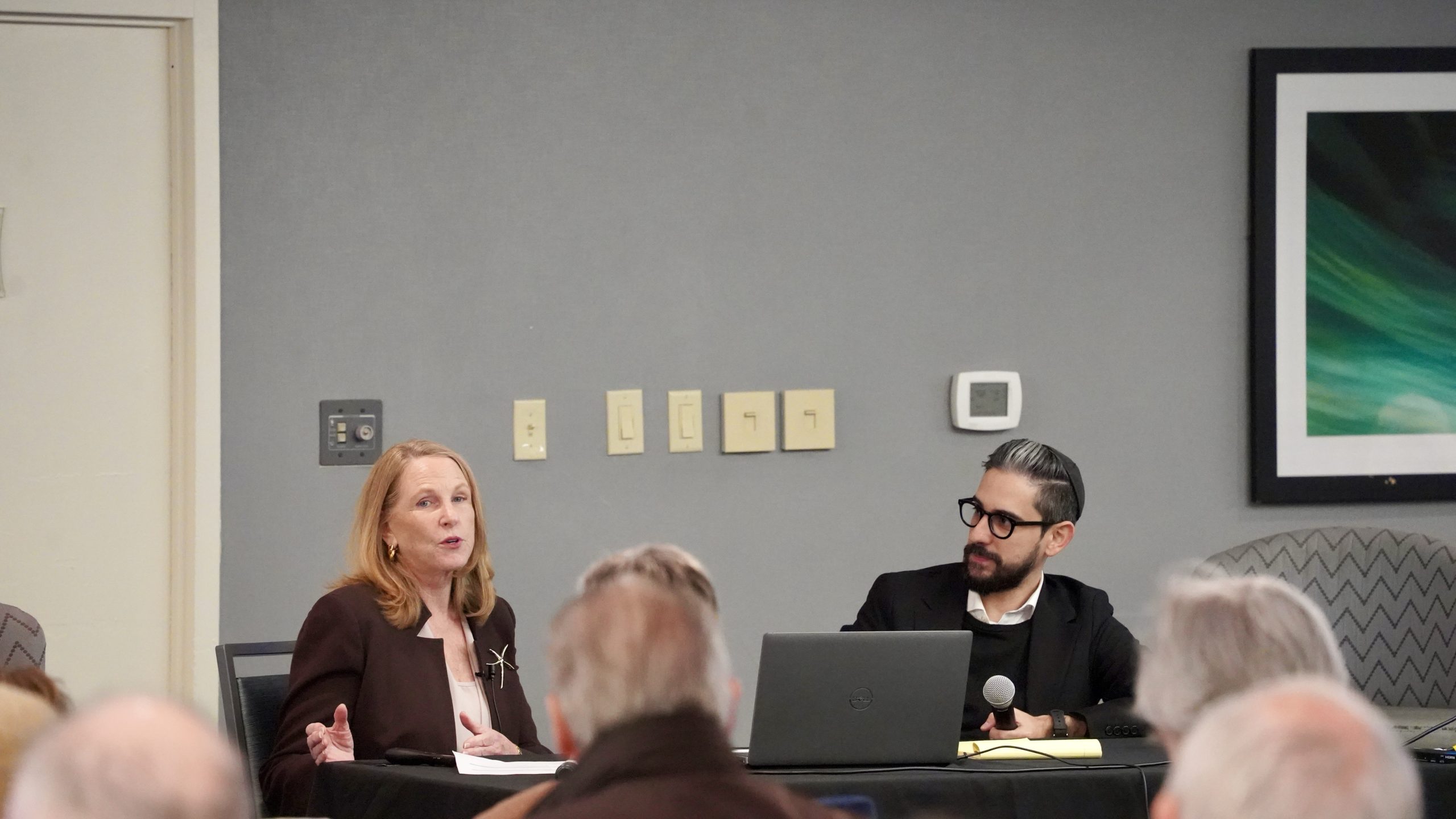
On November 18, MSATP welcomed National Taxpayer Advocate Erin M. Collins to Columbia, MD for a fireside chat with Eli Noff at our 2026 Practitioner Liaison Meeting & 4-Hour Maryland Update. With a full room in person and about 175 practitioners joining virtually, Erin spent nearly an hour talking candidly about how the Taxpayer Advocate Service (TAS) works, how practitioners can get help faster, and the changes coming to tax administration.
Erin has led TAS since March 2020. Her first day, she joked, came with a call from then-Commissioner Chuck Rettig telling her not to come to D.C. because he was shutting down the IRS for COVID. Before that, she spent 20 years at KPMG, where she led the firm’s IRS controversy practice for the Western region, and 15 years as an IRS attorney. That view from both sides of the table shaped everything she shared with our members.
What Erin Shared
Practitioners keep the system honest
Erin opened by recognizing the people in the room. Tax professionals prepare more than half of all returns, she noted, and likely handle an even larger share of collection and exam matters. She called practitioners essential to keeping tax administration on track, often by saying no when a client pushes for a position that isn’t supportable, as many did during the Employee Retention Credit rush. Eli added that practitioners are gatekeepers, and that their signature on a filing protects them as much as their clients.
When TAS can help, and how to help TAS help you
“We are not a second IRS,” Erin reminded attendees. With roughly 1,500 employees serving millions of taxpayers, TAS focuses on two kinds of cases:
- Hardship: for example, a taxpayer facing IRS collection who can’t pay rent.
- Systemic problems: when an IRS process isn’t working, such as an amended return still unprocessed at least 30 days past the IRS’s stated timeframe.
Her best practice tip: treat a Form 911 like a protest to Appeals. Lay out the facts, the law you’re relying on, and your supporting documents. A complete package means a case advocate doesn’t have to start from scratch. Eli added that the 911 text box expands, so attach notices and a clear, chronological explanation. “I need my refund” isn’t enough.
Erin also explained that TAS advocates can’t issue a refund or fix an account themselves. They make the case to the IRS business unit that can. “Please be nice to my advocates,” she asked. They’re working hard on cases that can take time on the IRS side.
Rebuilding after staffing cuts
Like the IRS, TAS lost more than 25% of its staff over the past year. That included 43 of the heads of its 73 local offices. TAS is rebuilding from the top down, starting with office leaders and managers before hiring case advocates. In the meantime, cases are now routed to whichever office has capacity, so a Maryland case may be worked in New York or California. Erin called that a good thing, because it means someone has time to work it.
Caseloads that ran 150 to 250 per advocate during COVID are now closer to 100. Practitioners should hear whether a case is accepted within about 30 days. TAS also now offers email with case advocates and electronic Form 911 submission, changes Erin said took years to win.
Why the phones get harder after April 15
Asked about long hold times, Erin explained that the IRS’s customer service representatives also do account work: transcript entries, penalty abatements, correspondence, and amended returns. During filing season, most move to the phones. After April 15, they shift back to working paper, and phone service drops. The IRS is still working on how to do both.
First-time abatement is now automatic
One of Erin’s longest-running efforts has paid off. Her research team found that more than a million taxpayers a year qualified for first-time abatement but never received it, and most earned under $50,000. Starting this past July, the IRS now applies that relief automatically when a taxpayer qualifies. Taxpayers with earlier years that qualified can still call to request it. Erin is still pushing the IRS to let taxpayers use reasonable cause first and save first-time abatement for later.
The TAS Act and Tax Court refund cases
Erin has spent nearly five years on the Taxpayer Assistance and Service Act, which includes 65 provisions, about 40 of them recommended by her office. It has cleared the Senate Finance Committee and is now with the House. One provision she highlighted would let the U.S. Tax Court hear refund cases. Today, a taxpayer with a small refund dispute must sue in district court or the Court of Federal Claims, so many simply walk away. In a quick poll, Erin revealed that about 85% of Tax Court petitioners represent themselves.
Separately, the National Taxpayer Advocate Enhancement Act was recently signed into law. It allows TAS to hire attorneys who report directly to the National Taxpayer Advocate.
AI with a human in the loop
Erin shared that the IRS piloted an end-to-end AI process on about 100,000 automated underreporter notices this year. She supports the efficiency but wants a human reviewing any adjustment, especially when self-represented taxpayers respond. Eli added a practitioner reminder: check every AI citation, and never put client information into a public AI tool.
Give back: adopt a clinic
Erin thanked attendees who volunteer with VITA and TCE and encouraged more practitioners to support Low Income Taxpayer Clinics, which TAS funds through about $28 million in federal grants. “It takes a village for tax administration to work,” she said.
TAS in the Room
Erin didn’t come alone. Three TAS case advocates staffed a private problem-solving room throughout the day, meeting one-on-one with members in 30-minute appointments to work through their clients’ cases. Ms. Jackson, the Local Taxpayer Advocate for the Baltimore office, was also on site, and Erin encouraged attendees to connect with her.
We’re grateful to the TAS team for bringing that kind of direct, hands-on help to Maryland practitioners.
A Full Day of Federal and State Updates
Erin’s fireside chat anchored a full day of learning, with 4 hours of Maryland updates and 4 hours of IRS sessions:
- General Maryland Tax Update with Debora Gorman, Director, Legal Division, Comptroller of Maryland
- Fireside Chat: Appeals, Offers in Compromise & Voluntary Disclosure Agreements with Jay Maschas, Director, Hearings and Appeals Division, Comptroller of Maryland, and Eli Noff
- Maryland Tax Connect & MyCommConnect with Michelle Mitchell and Betsy Bury, Comptroller of Maryland
- Navigating IRS Audits with Antoine Drummond, Supervisory Exam Agent, IRS
- New Capabilities for Business Tax Pros and IRS Online Accounts with Christopher K. Green, Stakeholder Liaison, IRS
Thank you to Erin and the Taxpayer Advocate Service, to Eli Noff for moderating and for making the introduction, to the Comptroller of Maryland for always keeping our members informed, and to the IRS Stakeholder Liaison team for being a wonderful partner year after year.
Missed It?
The IRS portion of the program, including Erin’s fireside chat, is being rebroadcast online on Thursday, November 19, from 8:00 AM to 12:00 PM ET for 4 hours of free CE. Register for the rebroadcast.
Events like this are what MSATP membership is all about: direct access to the people and agencies shaping your practice. If you’re not a member yet, join MSATP to be part of the conversation next year.